
LESSON 3: Use your Imagination to simplify the scene. I like to squint at the scene and decide what is most important to the scene. Asking a few questions like: What do I see first? Where do my eyes go next? Is it fluid movement or jerky? What would make it more transitional and fluid? The answers help you to edit out the elements which block the emotion you desire. Keep in mind that a vibrant color palette will bring excitement, while a more muted color palette will calm things down. A highly contrasted value study will help you decide whether you have achieved your goal–providing an emotional reaction.
The inspiration image (Image 1) below shows a tiny sparrow in the same color palette as the field of lingering Queen Anne’s Lace flowers. The stems are dominant in the foreground where the sparrow is perched. The darkest feathers match the stem coloring. And the sky in the background is filled with muted shadows.

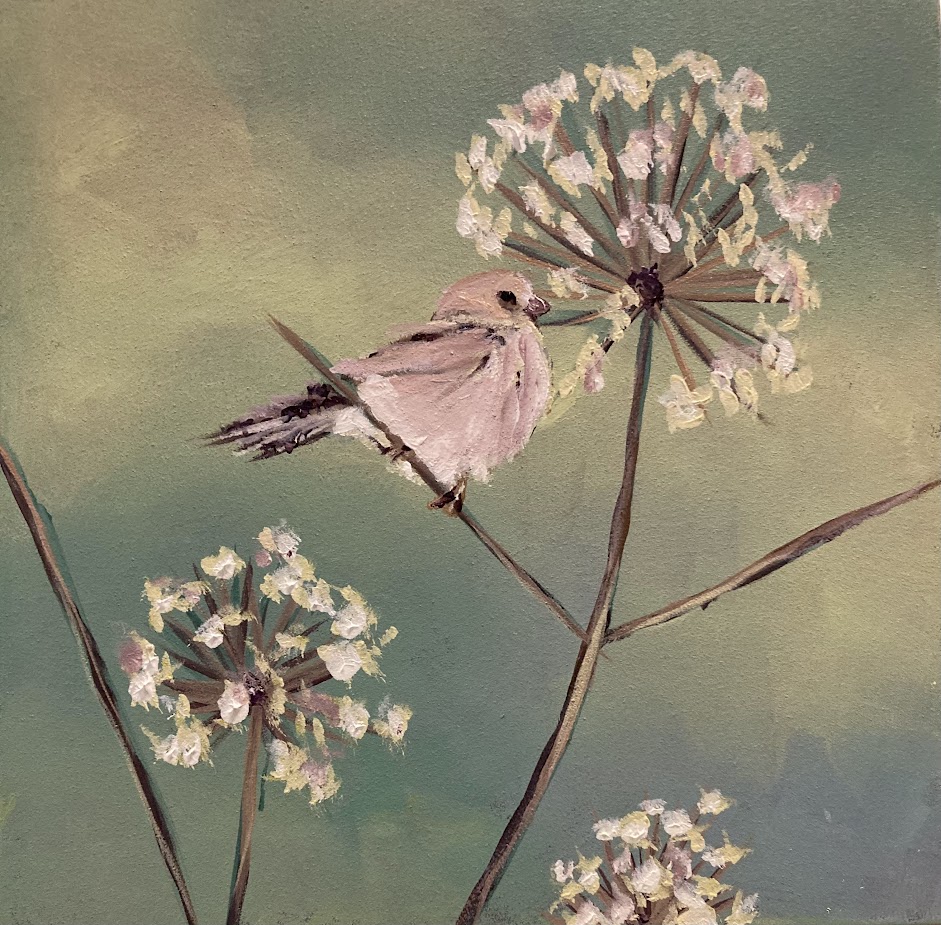
- Caption: Image 1: Inspiration Image: Tiny Sparrow resting in spent Queen Anne’s Lace
- Caption: Image 2: Painting: Lady Sparrow by R. Shuler, Acrylics to Wood Panel 8x8x2, $96.
Notice how the painting (Image 2) has those same aspects but in less detail. Rather than paint every single flower head and stalk, the artist painted only one plant. It was the most important one because of the bird perched there. Do you see how the entire mood shifts when a new color scheme is used in the sky shadows? The artist added the blush of pink from the sky to enhance the beauty of the tiny sparrow. This piece is named: Lady Sparrow—playing off the name of the flowers in the field: Queen Anne’s Lace. What do you think about this simplifying technique? Will you attempt it in your next work?
Becca invites you to stay tuned for more insights! Lesson 4: The Magic of Color placement and Value explores the importance of color and value placement. It questions whether one should create a color palette chart in advance or skip this step and jump in headfirst. If you scroll to the end of this blog post, you will find Lesson 1 for The Illusion of Details in Practice art lessons by R. Shuler / aka: Becca the artist behind the Green Craft Studio. Peer at her Facebook page when you find the link at the end of Lesson 1 and sign up for her ongoing acrylic art lessons held two Fridays per month in Ellijay, Georgia via the Gilmer Arts Center.
LESSON 2: Creating the Illusion of detail is challenging and takes practice. Practicing the illusion of detail rather than painting all the details allows one to create intriguing artwork. Adding too many details can make a scene visually busy. If we “quiet the noise” and edit the scene into the most basic elements, we can create the illusion of detail. Simply stated: We get more done with less; we simplify the process just as Impressionists do. So much information can be conveyed with one single stroke of the brush if it’s done well. It’s a fun way to paint, but it’s not easy. Copying the subject is easy. Simplifying the subject and painting with fewer strokes is more difficult.
This painting process is beautifully illustrated when comparing an inspiration photograph to the work in progress. Can you see where the artist simplified the scene? The overall scene is represented; however, the details are more imagined than real. If you are one who is attempting to loosen up your paintings–adding fewer details–this technique is one you should practice. Some questions to consider: How do you decide what to remove and what to keep? Which elements require you to keep the details? More on this in future lessons.
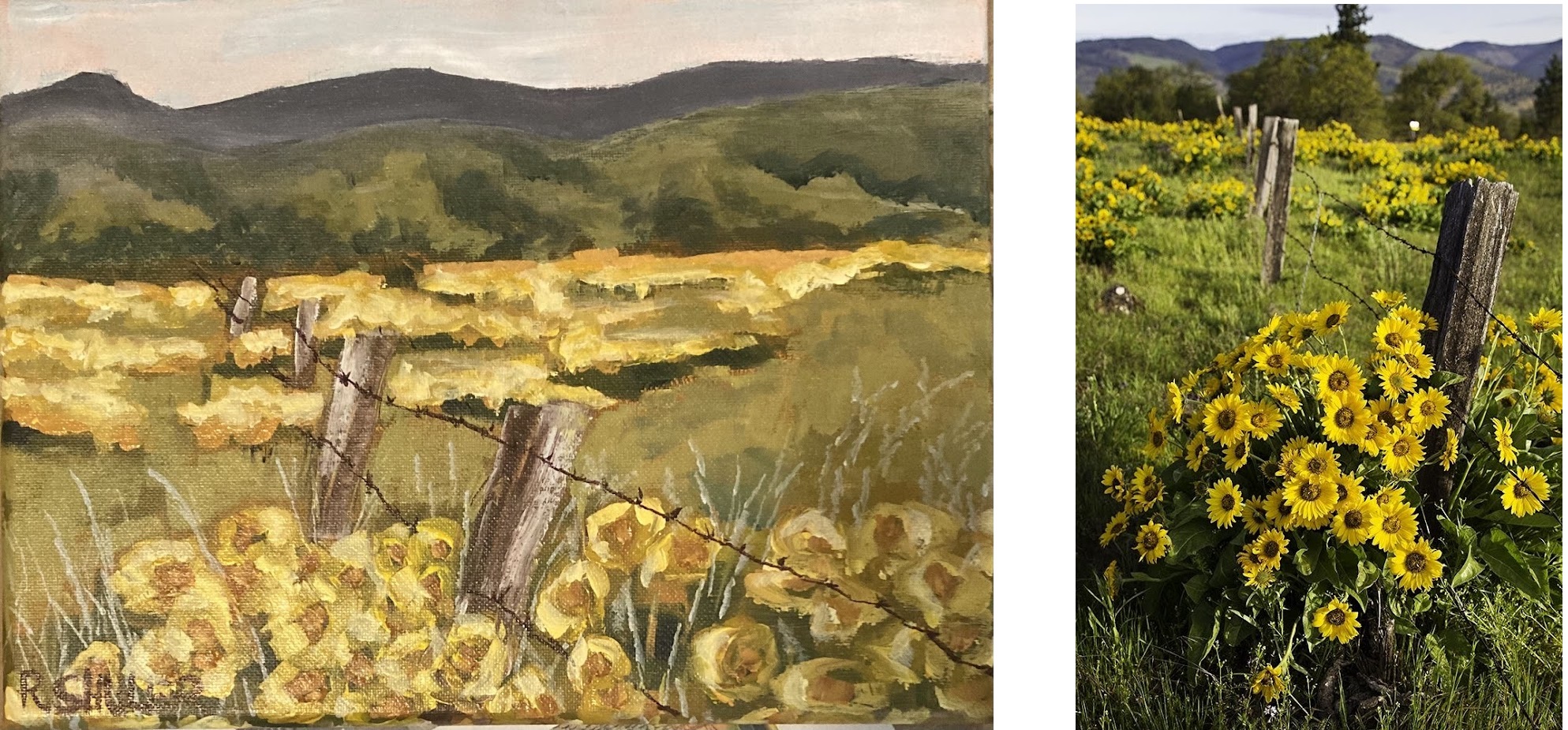
What do you think it takes to master this process? Lesson 3 will help you relax as you learn how to use your imagination and let it do all the work for you. Stay tuned for more next week.
LESSON 1: Getting Caught Up in the details is a common problem for aspiring artists. Trying to paint every leaf, branch, blade of grass, highlight, shadow, line, or shape can be overwhelming not only for the artist but also for the viewers of the cluttered painting. Determine why you are painting the scene? What is it that drew you in? What do you feel as you work on it? Provide that emotional connection to those who admire your work, and you’ll find followers. For instance: Do we feel the emotion of the storm in those dark clouds in a moody sky or are we too focused on the details of the raindrops?
This red barn painting is a perfect example of creating the illusion of detail without adding every little board and nail. Notice how the illusion of texture is added with only a few strokes of the brush. In the pine trees, not every pine needle is added, nor is every bump in the bark. Overall, the painting is aesthetically pleasing, well-balanced in color value and composition. What else do you enjoy about it? What would you change? What style did the artist use: realism, impressionism, abstract?

First, what exactly is the illusion of detail and why is it important to an artist? This is Lesson 1. There are five more lessons to come. See the list below and stay tuned. If you wish to enroll in an acrylic paintings session, reach out by way of email to learn more about art lessons with Becca: beccasgreencraftstudio@gmail.com
- The Illusion is Challenging
- Using Your Imagination is Relaxing
- Colors & Value placement can be Magic
- What are Feature Details?
- Become a Master of Illusion with this TIP
Becca adds Acrylics 101 Sessions for students from beginners to advanced. She paints with you during class and each session helps you to build skills necessary to paint beautiful gallery worthy pieces of artwork. She posts her session schedule by adding weekly events to Facebook–her acrylic sessions are usually on Fridays between 1-4pm and held at the local Art Center where she lives in Ellijay, Georgia. Follow her Facebook page to keep up or join a session: https://www.facebook.com/ArtwBecca/events
 Beccas Green Craft Studio